How to tell if your attic has spray foam insulation
Spotting spray foam in a Weston super Mare loft is easier than most homeowners think. Here are the visual signs, the touch tests, and the paperwork clues that confirm it.
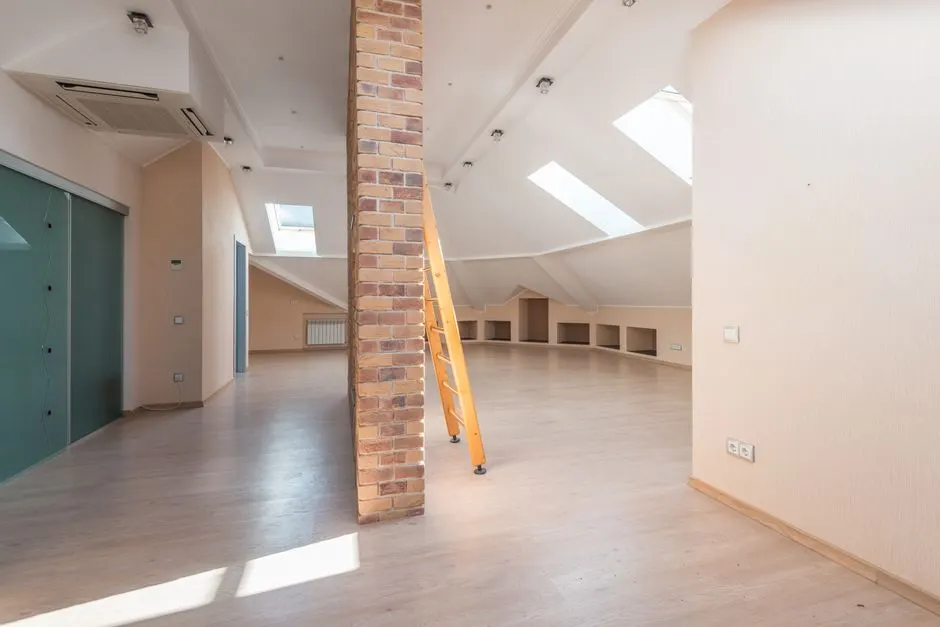
You can tell your attic has spray foam insulation by looking for a hard, plastic-like crust bonded directly to the underside of the roof deck or between the rafters - it looks nothing like the soft mineral wool or loose granules most UK lofts contain. If the surface is smooth, glossy, expands out of a nozzle-shaped bead, and refuses to compress when you press it, that is spray foam, and it is almost certainly polyurethane.
This guide covers what spray foam actually looks like, the signs that separate it from older insulation types, how to check your own loft safely in Weston super Mare, and when it is worth getting a proper inspection before you buy, sell, or remortgage a property.
What spray foam insulation actually looks like
Spray foam insulation is a two-part polyurethane chemical that is mixed at a nozzle and sprayed wet onto a surface, where it expands within seconds and cures into a rigid foam layer. In a UK loft it is usually applied to the underside of the roof deck, between the rafters, or across the ceiling joists in the floor of the loft.
Freshly applied foam is a pale cream or off-white colour. Once cured it turns amber, honey-yellow, or a dull orange-brown as it ages and oxidises. The texture is the giveaway: it looks like expanding builder's foam from a can, but applied in wide overlapping bands 25mm to 100mm thick. It has a skin on the surface and a spongy, bubbled interior if you cut into it.
There are two types you will come across in Somerset lofts:
- Open cell - softer, lighter, spongier, usually cream or pale yellow, and it crumbles rather than snaps when you break a piece off.
- Closed cell - denser, harder, heavier, often a deeper amber or brown, and it snaps cleanly with a brittle edge.
Both are sprayed, both expand, and both are the reason a growing number of mortgage lenders now ask questions before they will release funds on a property. If you want the full picture on how we take it out, our Spray foam removal service covers lofts, roofs, and cavity walls across the area.
How can I tell if my attic has spray foam insulation in Weston super Mare?
You can tell if your attic has spray foam insulation in Weston super Mare by shining a torch along the roof pitch from inside the loft and looking for a continuous, seamless coating bonded to the timbers - spray foam has no seams, no rolls, and no loose edges. Mineral wool comes in rolls with visible joins. Blown cellulose and loose fill sit as a fluffy layer on the loft floor. Spray foam is glued to the structure itself.
Run through this quick checklist before you climb up:
- Look at the loft hatch from below. If there is a hard crust around the frame or the hatch has been cut through a solid foam layer, that is a strong sign.
- Check the eaves from outside where you can see into the roof void - foam often shows as a pale yellow band behind the fascia.
- Look at the underside of the roof tiles or felt through any gap. Spray foam applied to the roof deck is visible from inside the loft as a solid blanket.
- Check the age of the property. Foam was heavily marketed in the UK between roughly 2010 and 2018 under government-backed green schemes, so a loft insulated in that window is a prime candidate.
- Look for paperwork. Any installer who sprayed foam should have left a certificate, a guarantee, or a mention in the EPC.
If you would rather not climb into a confined, dusty roof space, we carry out a full Insulation assessment in Weston super Mare, Somerset with photographs of every rafter so you have evidence in writing, whether you are selling or staying put.
Signs of spray foam insulation in a Weston super Mare attic
The signs of spray foam insulation in a Weston super Mare attic show up in three places: what you see, what you feel, and what the building does around it. Visual signs are the most reliable, but the behavioural clues are often what sends homeowners up the ladder in the first place.
Visual signs
- A continuous, seam-free coating bonded to the underside of the roof deck or between rafters.
- Amber, honey, or brown discolouration where the foam has aged.
- Over-spray around nails, cables, pipework, and the tops of ceiling joists.
- A visible chemical smell in the loft, even years after application - usually described as plasticky or sour.
- Condensation staining or dark mould on the underside of the roof timbers, which is common where foam has sealed a roof that was never designed to be sealed.
Behavioural signs
- The loft feels noticeably warmer in summer and the roof space holds heat instead of venting it.
- Timbers near the foam feel damp to the touch, even in dry weather.
- You can hear the roof creak and shift more than it used to, because trapped moisture softens the timber.
- Your energy bills did not drop as much as the installer promised - foam applied to the roof deck often underperforms because it blocks the ventilation path.
One thing worth knowing: foam that has been in place for more than a decade in a coastal town like ours often shows salt-related surface bloom and a chalky white residue on the outer skin. That is not mould - it is the foam breaking down.
How to check your loft safely, step by step
Checking your own loft is a 20-minute job if you do it properly, and a trip to A&E if you do it badly. Lofts are the least regulated space in a UK home - joists are often only 100mm deep, there is no lighting, and the insulation you are standing on hides the beams.
Here is how we do it, and how you can do it safely:
- Wait for a dry, cool morning. Foam is easiest to identify when the roof is not baking hot, because heat softens the surface and hides the texture.
- Take a torch, a dust mask, gloves, and a phone. Photograph everything before you touch it.
- Walk only on the ceiling joists or lay boards across them. Never step between joists - you will go through the plasterboard ceiling below.
- Look along the roof pitch first. Spray foam is almost always applied to the underside of the roof deck, not the loft floor.
- Press a small area with a gloved thumb. Foam springs back and leaves no indent. Mineral wool compresses and stays compressed.
- Snap off a thumbnail-sized piece if it is safe to do so. Closed cell snaps brittle. Open cell crumbles. Neither should smell strongly of chemicals once cured - if it does, get it looked at.
- Check the timbers around the foam for damp. A cheap moisture meter from a builders' merchant costs about £20 and tells you more than any visual check.
If you find foam, do not try to scrape it off yourself. Polyurethane dust is an irritant, and cutting into a sealed roof can release trapped moisture into the rest of the house. That is a job for a proper spray foam removal company near me Weston super Mare Somerset with extraction equipment and the right PPE.
Is spray foam insulation common in Weston super Mare attics?
Spray foam insulation is common in Weston super Mare attics, particularly in properties built or renovated between 2010 and 2018 when government-backed insulation schemes pushed foam as a quick fix for cold, draughty lofts. We see it most often in 1930s semis, 1970s estates, and converted bungalows across the town.
The local housing stock makes it worse. Weston has a large proportion of older properties with slate or concrete tile roofs, no breathable membrane, and ventilation gaps that were designed to let the roof breathe. Spray foam blocks those gaps. Add the coastal humidity - average relative humidity here sits around 80% for much of the year - and you get a roof that cannot dry out.
We see the highest concentrations in the older streets around Spray foam removal in Weston-super-Mare Town Centre, where Victorian and Edwardian terraces were retrofitted in bulk, and in the larger post-war homes out towards Spray foam removal in Worle, where loft conversions were popular in the same period.
If you are buying in either area, ask the seller directly whether the loft has been spray foamed. If they do not know, get an inspection before you exchange contracts.
Common mistakes homeowners make when checking
The most common mistake is assuming that any yellow foam in the loft is spray foam insulation. It is not. Old expanding foam around pipe penetrations, foam-filled cavity closers, and even yellowed fibreglass batts all get mistaken for spray foam every week.
Other mistakes we see:
- Confusing spray foam with blown-in loose fill. Loose fill sits on the loft floor as granules. Spray foam is bonded to the roof structure.
- Only checking the loft floor. Most spray foam is on the roof deck, which you cannot see unless you get your head up between the rafters.
- Trusting a home buyer's survey. Standard RICS HomeBuyer surveys are not invasive and often do not report spray foam at all, even when it is clearly present.
- Assuming the EPC tells you. An EPC records the insulation type only if the assessor could see it. Many EPCs simply say "insulation: unknown".
- Poking at it with bare hands. Cured polyurethane is generally inert, but the dust from cutting or breaking it is a respiratory irritant.
- Believing it is always a problem. Some spray foam installations are perfectly sound. The issue is that lenders, surveyors, and buyers treat it as a risk, and that is what affects your sale.
If you want a straight answer rather than a guess, a proper insulation removal service in Weston super Mare, Somerset will tell you what is in your loft, what condition it is in, and whether it needs to come out.
When to call a professional
Call a professional if you have found foam and any of the following is true: the timbers around it are damp, the foam covers more than about 30% of the roof deck, you are selling or remortgaging the property, or your lender has flagged it on a valuation.
We also get called in when homeowners simply cannot get a straight answer out of anyone else. Surveyors hedge, lenders go quiet, and installers who sprayed the foam are often long gone. Our team at Crown Insulate Spray Foam inspects the loft, photographs everything, and tells you plainly whether the foam is causing a problem or just sitting there.
If it needs to come out, we remove it without damaging the roof structure, using extraction equipment that captures the dust at source. Most lofts are cleared in a single day. You get the timbers back to bare wood, the ventilation restored, and a clean loft you can reinsulate properly.
Frequently Asked Questions
How can I tell if my attic has spray foam insulation in Weston super Mare?
Look for a hard, seamless coating bonded to the underside of the roof deck or between rafters - it will be amber, cream, or brown and will not compress when pressed. Mineral wool compresses and has visible seams; spray foam does neither. If you cannot get into the loft safely, book an inspection.
What are the signs of spray foam insulation in a Weston super Mare attic?
The main signs are a continuous foam layer on the roof timbers, a plasticky smell in the loft, damp or darkened timbers around the foam, and a roof space that feels unusually warm in summer. Coastal humidity in Weston makes condensation staining on the timbers a common secondary clue.
How do I check for spray foam insulation in Weston super Mare Somerset?
Take a torch into the loft on a cool, dry morning, walk only on the ceiling joists, and shine the light along the roof pitch from the eaves upwards. Photograph anything that looks like foam, then press a small area with a gloved thumb. Foam springs back; wool stays flat.
Is spray foam insulation common in Weston super Mare attics?
Yes. It is most common in properties insulated between 2010 and 2018 under government-backed schemes, particularly 1930s semis, 1970s estates, and converted bungalows. Older terraces in the town centre and larger post-war homes in Worle and Milton are the areas we see it most.
Who can inspect my attic for spray foam insulation in Weston super Mare?
Crown Insulate Spray Foam inspects lofts across Weston super Mare and the surrounding Somerset area. We photograph the roof structure, test the timbers for moisture, and give you a written summary you can pass to a lender, surveyor, or buyer. Most inspections take under an hour.
Get help with Spray foam removal in Weston super Mare
If you have found spray foam in your loft and you are not sure whether it is a problem, we will tell you honestly - and if it needs removing, we will do it cleanly, quickly, and with the roof structure left in better shape than we found it. Call Crown Insulate Spray Foam on 0193 424 5129 and we will book you in for an inspection.